Lebanese businesses are transitioning to solar energy due to severe energy insecurity, collapsing grid infrastructure, and diesel costs that have turned monthly energy bills into a financial crisis of their own. This guide breaks down the economics, the system types, the risks, and why working with a professional facility management and solar installation partner matters more than buying panels off a truck.
Lebanon's decentralized solar PV capacity grew from roughly 54.9 MW in 2018 to approximately 1,254 MW by the end of 2023, according to a UNDP report on renewable energy investment. Cumulative private investment in solar PV reached around $1.39 billion by that same year. Over 250,000 solar systems exist in Lebanon today, spread across rooftops from Tripoli to Saida, industrial zones in Mkalles and Dekwaneh, and residential neighborhoods across the Bekaa.
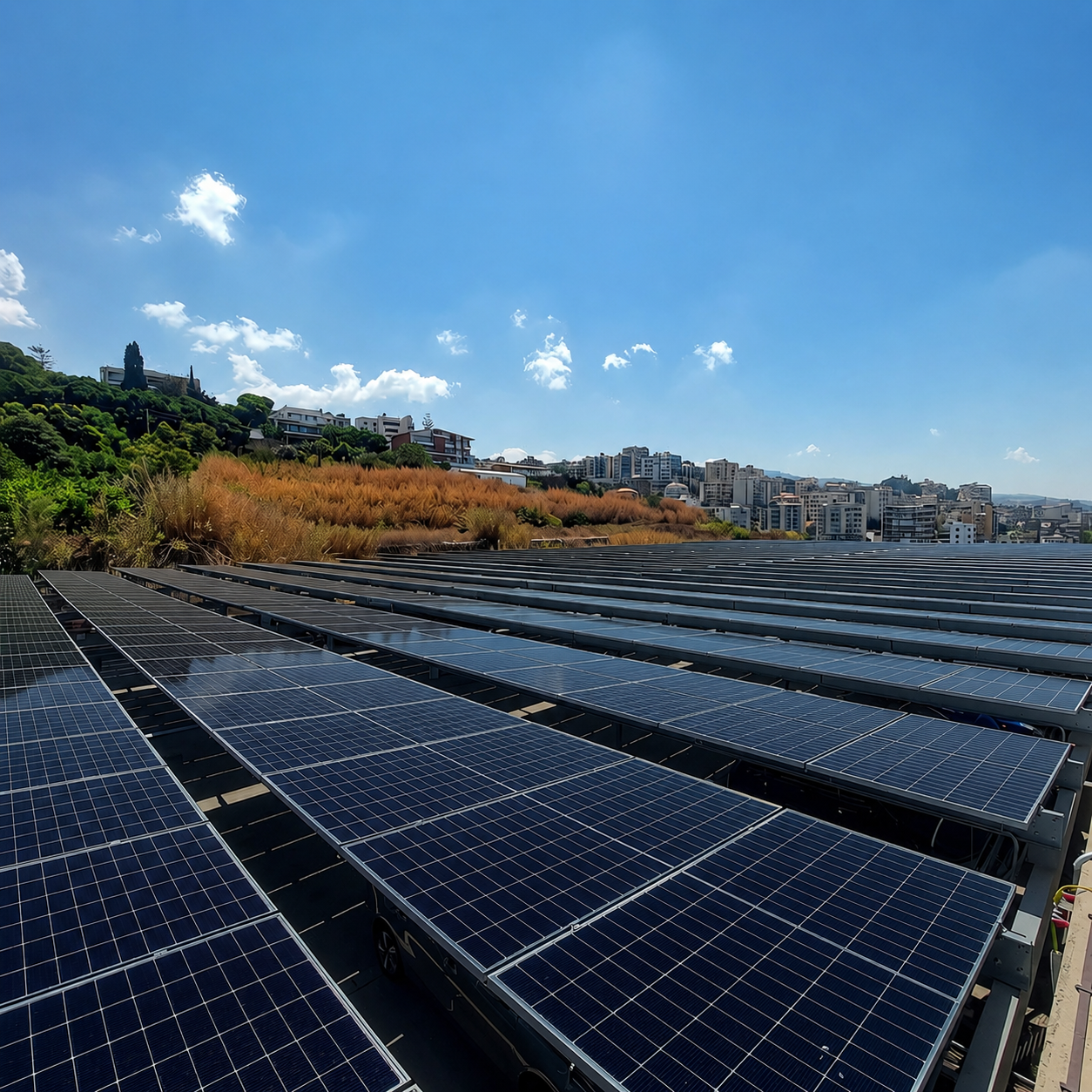
Yet the picture is uneven. Only 20 to 25% of Lebanese households have installed solar systems; the rest of the population, roughly 75 to 80%, cannot afford them at current prices. The solar boom has been concentrated among those with cash reserves or access to financing, while the commercial and institutional sector is now catching up fast.
Lebanon experiences about 300 days of sunshine per year, and studies estimate that solar systems can cover up to 34% of Beirut's electricity demand. That combination of crisis and natural resource is why the solar revolution in the business sector has accelerated since 2022. MMG Holdings, Lebanon's leading facility management company and solar installation partner, has been at the center of this shift for commercial and institutional clients.
But a solar boom without engineering standards, quality control, and professional maintenance carries its own dark side. Poorly chosen systems fail. Cheap components degrade early. And the waste problem is already building.
Électricité du Liban's supply capacity dropped from over 1,700 MW in 2017-2019 to roughly 226 MW by 2022. In practical terms, many areas received as little as 1 to 2 hours of grid electricity per day by mid-2022, and some zones reported 0 hours for stretches during the worst of the crisis, according to World Bank analysis.
This forced banks, hospitals, manufacturers, and service companies onto private generators for 20+ hours daily. Private generators have become unsustainably expensive for Lebanese businesses: generator tariffs reached 41,973 LBP/kWh in urban areas below 700 meters and 46,170 LBP/kWh in exposed or high-altitude villages, translating to roughly $0.47 to $0.52 per kWh. Diesel price volatility poses a direct financial risk to every company that still relies on generators as its primary power source.
Households often rely on private generators despite solar installations, because many residential systems lack sufficient battery storage for overnight loads. Businesses face the same gap unless their solar systems are properly sized and integrated with backup infrastructure. Solar energy reduces reliance on the unstable public electricity grid, but only when the system design accounts for the actual load profile and the hours when neither sun nor grid is available.
Manufacturing plants lose production runs during outages. Hospitals must prioritize which equipment stays powered. Data centers face downtime that erodes client trust. The need is not just for panels on a roof; it is for resilient solar solutions integrated with professional facility management.
Solar energy costs $0.057 per kilowatt hour in Lebanon. Compare that to diesel generator electricity at $0.30 to $0.50 per kWh, depending on location and fuel price. The math is straightforward: every kilowatt hour shifted from diesel to solar saves a business $0.24 to $0.44.
Solar systems in Lebanon often cost $4,000 to $5,000 to install for smaller setups, with commercial-scale systems (hundreds of kWp) running higher but delivering proportionally larger savings. A World Bank study modeled a 400 kW diesel generator versus a hybrid system combining 280 kWp of solar PV with a generator. The hybrid system's levelized cost of energy dropped by 31%, annual profits increased by 225%, and 25-year net present value rose by 930%.
Investing in solar energy leads to fast returns on investment for Lebanese businesses. Typical commercial solar installations achieve payback in 2 to 4 years. MMG Holdings' energy solutions target a 3-year ROI for their clients, built on load analysis, CAPEX/OPEX comparison, and long-term financial modeling that accounts for diesel price sensitivity, battery replacement cycles, and inflation.
Solar power installations reduce operational costs by displacing the most expensive energy source on a business's balance sheet: the diesel generator. Corporate finance teams are now running NPV comparisons between continued generator reliance and solar hybrid systems, and the solar option wins in nearly every scenario where diesel exceeds $0.50 per liter.
The shift from residential to commercial solar installations accelerated around 2022. Before that, most of Lebanon's solar capacity was small residential rooftop systems. By 2023, businesses, institutions, and industrial facilities were driving new capacity additions, with system sizes in the hundreds of kWp range becoming common.
Retail chains began installing rooftop solar systems across multiple branches. Banks equipped headquarters and regional offices. Universities covered parking lots with photovoltaic panels acting as carports. Hospitals adopted hybrid systems combining solar panels, lithium batteries, and existing diesel generators to protect critical care operations.
The change in mindset goes beyond cost savings. Businesses now treat solar energy as a strategic asset for continuity, brand positioning, and ESG reporting. Companies publicize reduced carbon footprints and cleaner operations. The solar revolution in Lebanon's business sector is not a trend; it is a structural shift driven by grid failure and economic pressure.
MMG Holdings moves companies from ad hoc panel buying to professionally engineered solar solutions integrated into overall facility management. That distinction separates systems that perform for two decades from systems that underperform within two years.
Different buildings need different solar system architectures. Choosing the wrong type wastes capital and creates operational gaps.
MMG designs, installs, and maintains all three types, matching each to the site's load profile, roof structure, and facility management strategy.
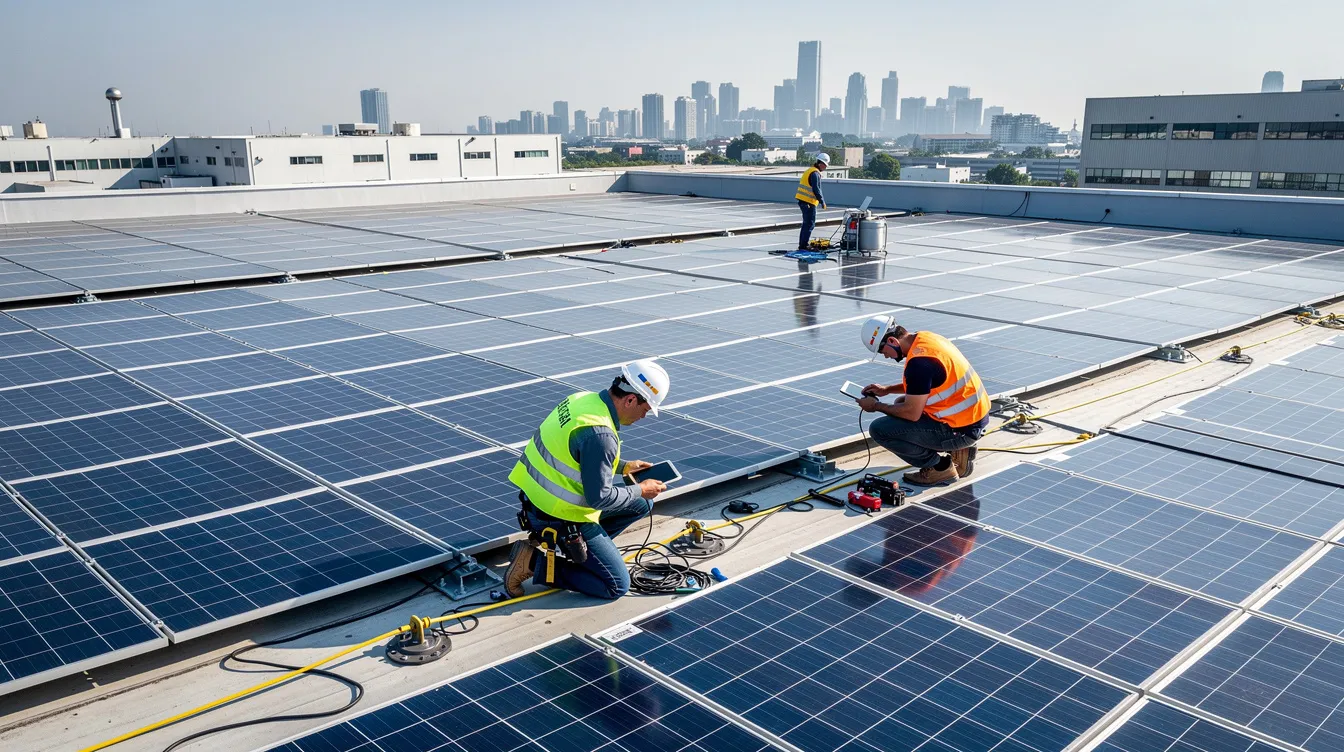
Three snapshots illustrate what solar does for businesses when designed and managed properly.
A bank branch in the Bekaa. Fransabank's Laboue branch installed a solar system with 12 panels, 32 batteries (6V-225Ah), and a 4,000 W inverter, designed to sustain roughly 15 hours of autonomy on the branch's 1,680 W load. The branch reduced its generator dependency and maintained operations during extended grid outages without interruption.
A water bottle manufacturing plant. An Ark Energy proposal for a plant consuming about 8 MWh annually (entirely from diesel generators, costing roughly $2 million per year) recommended a 1.4 to 1.5 MWp rooftop solar PV system. Projected annual savings: $720,000 with a 30% reduction in generator usage.
A mixed-use commercial tower. In Beirut's urban areas, shared rooftop solar systems are emerging in office-plus-apartment buildings. A centralized hybrid system replaces per-floor generator subscriptions, cuts energy bills for all tenants, and eliminates the noise and air pollution of rooftop diesel generators. MMG's role in these projects spans design, permits, installation, and 24/7 technical support for the building's management.
Lebanon's solar boom lacks government regulation and oversight. That gap has allowed low-quality panels, undersized inverters, improperly rated cables, and unsafe roof mounting to spread across thousands of installations.
Solar systems do not emit toxic gas emissions during operation. But the equipment has a finite life, and solar panels can contain toxic materials like cadmium and lead. Lead acid batteries last between three to four years before needing replacement. Cheap panels from unvetted suppliers degrade faster than the 20 to 25 year lifespan that quality modules deliver. Lebanon's solar boom is creating a looming toxic waste crisis.
The numbers at a global level are sobering: by 2050, up to 78 million metric tons of solar panels will be waste. In Lebanon, the problem is compounded by the fact that only 0.2% of e waste is formally collected and recycled. Expired batteries, dead panels, and failed inverters are piling up with no structured disposal pathway.
For businesses, the risks are direct:
MMG Holdings' engineering standards, vendor vetting, and preventive maintenance programs protect clients from these failures. Every component is selected against IEC certification requirements, and every installation undergoes structural and electrical safety review before commissioning.
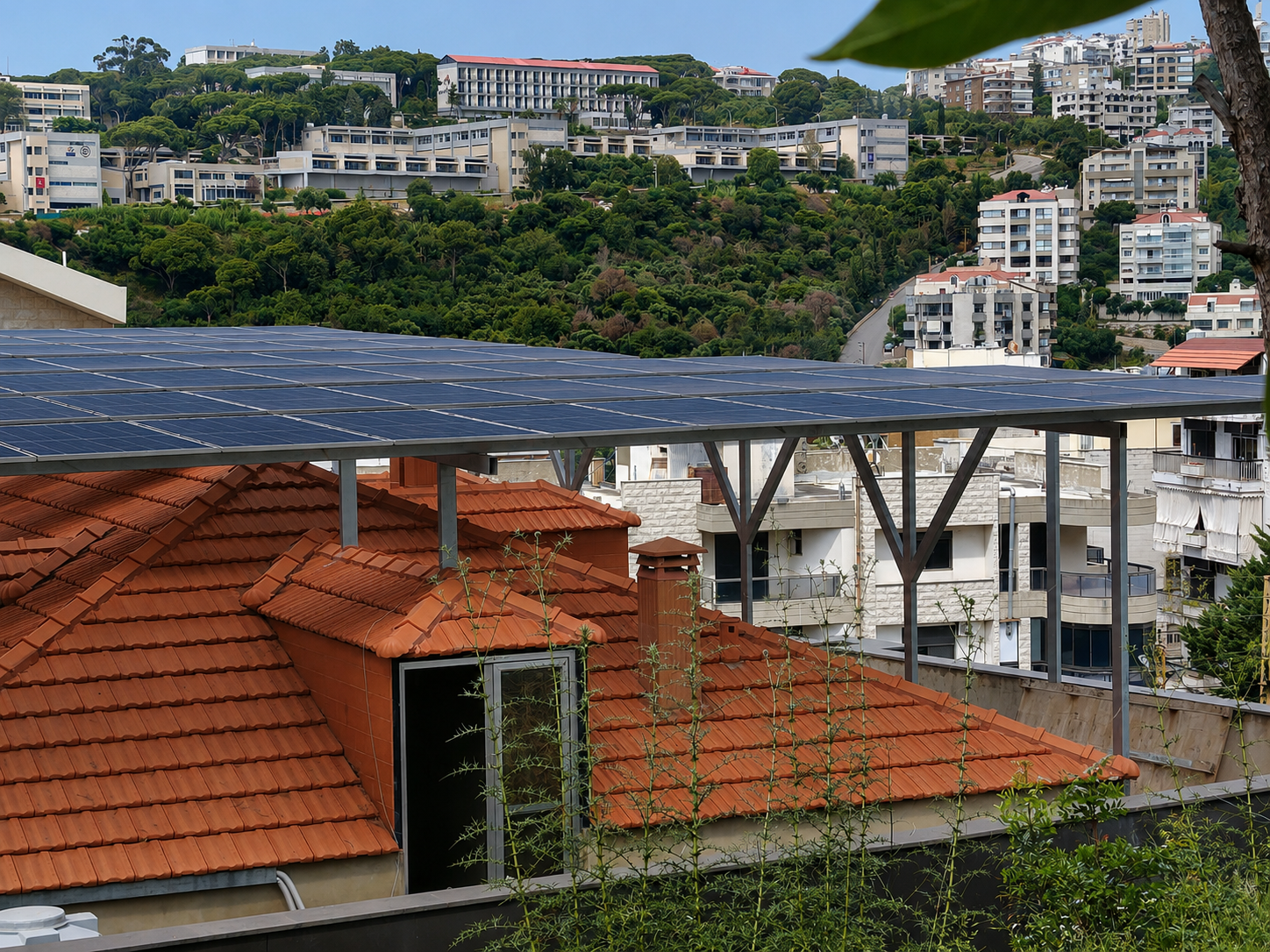
Solar panels on a roof are not a finished product. They are one component in a building's electrical, mechanical, and life-safety ecosystem. A solar system must integrate with HVAC loads, elevator circuits, IT infrastructure, fire alarm panels, and building management systems. Without that integration, energy conservation targets fall short and equipment conflicts arise.
Key operational tasks that determine long-term solar performance:
MMG Holdings, as Lebanon's leading facility management and energy management company, aligns solar design with each building's full technical infrastructure. Their soft support services and 24/7 helpdesk ensure that a panel issue at 2 AM triggers a response, not a next-day ticket.
MMG Holdings is the leading facility management company and one of the best solar installation partners in Lebanon. Founded in 1999, MMG Holdings has over 25 years of experience simplifying complexity across building operations, energy systems, and property management.
They serve 12 sectors including industrial, commercial, residential, and public facilities. Their client list includes banks, embassies, hospitals, schools, and high-rise towers. 98% of MMG's clients are retained over time, a retention rate that reflects delivered results rather than contractual lock-in.
MMG's energy management team designs solar energy systems that work with existing generators, UPS units, and building automation. Their energy solutions can achieve a 3-year ROI because they size systems to actual loads rather than catalog specifications. MMG offers 24/7 technical support for emergencies, combining remote monitoring with on-site technician dispatch.
The difference between MMG and a panel reseller is the difference between a reliable, maintained power system and a collection of equipment on a roof. In a country where the rest of the supply chain often lacks accountability, that difference determines whether a solar investment pays off or becomes a write-off.
Businesses need a structured process, not a purchase order, to get value from renewable energy. MMG's workflow follows a sequence that eliminates guesswork:
Solar panels can last 20 to 25 years with proper maintenance. Quality modules degrade at roughly 0.5 to 0.7% per year. Without maintenance, dust buildup alone can cut output by 15 to 25% in Lebanon's dry summer months.
MMG's preventive maintenance program includes:
MMG's 24/7 technical support, incident response protocol, and detailed monthly reporting give facility managers and CFOs clear visibility on savings and system performance. This long-term approach prevents the solar waste crisis at the building level and protects both financial returns and the environment.
The regulatory environment in Lebanon is gradually improving for renewable energy projects. Net metering frameworks now allow businesses to trade excess solar power back to the grid, creating an additional revenue stream that improves project economics. Financing products like Banque de l'Habitat's solar-specific loans (USD-denominated, 5-year terms) are opening access for businesses that cannot fund systems from cash reserves alone.
Emerging opportunities for the commercial sector in the Middle East and Lebanon include:
Lebanon's rooftop solar potential has been estimated at 28.1 TWh per year, roughly twice the country's 2019 national consumption. The technology and the sun are not the bottleneck. The bottleneck is professional execution: proper design, quality components, disciplined maintenance, and integration with the building's full operations.
A leading facility management company like MMG Holdings helps clients navigate evolving regulations, incentives, and technical standards as the decades ahead bring grid reforms and stricter building codes. Lebanese businesses that treat solar systems as strategic infrastructure, not a quick purchase, will carry a cost and reliability advantage for the next 20 years.
Contact MMG Holdings to start with a site-specific load analysis and find out what a professionally engineered solar system can do for your facility's bottom line.
.png)


